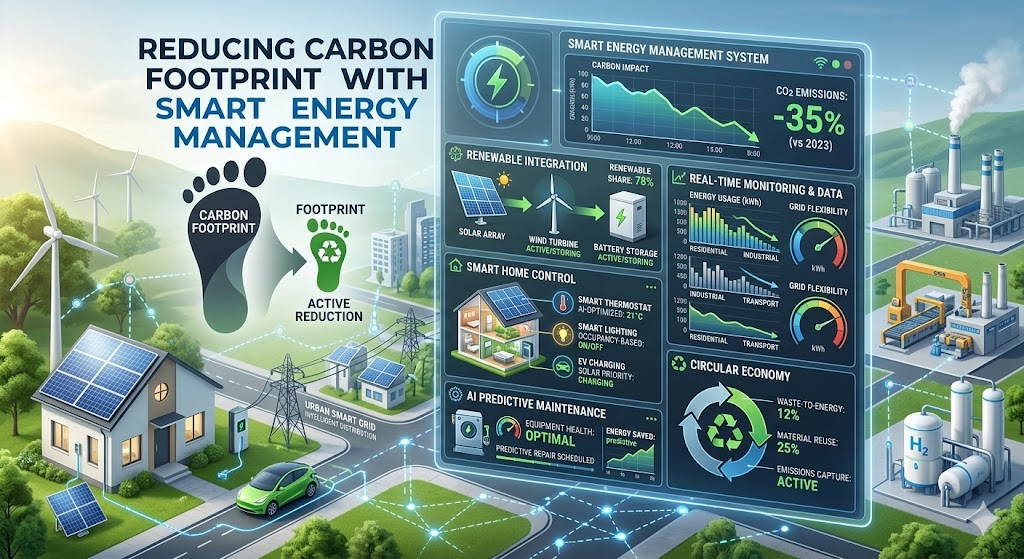
🌱 Reducing Carbon Footprint with Smart Energy Management System (EMS): Complete Industry Guide 2026
🌍 What is Carbon Footprint?
A carbon footprint is the total amount of greenhouse gases (CO₂ emissions) produced directly or indirectly by a business, industry, or individual.
In industries, major sources include:
- Electricity consumption
- Diesel generators
- Machine operations
- HVAC systems
👉 Higher energy usage = Higher carbon emissions
⚡ What is Smart EMS (Energy Management System)?
A Smart Energy Management System (EMS) is a digital solution that monitors, controls, and optimizes energy usage in real time.
It uses:
- IoT sensors
- Smart meters
- Cloud-based software
- Data analytics
👉 EMS = Measure → Analyze → Optimize → Save
🚀 Why Reducing Carbon Footprint is Important
🌱 1. Environmental Responsibility
Lower emissions help protect the environment and reduce global warming.
💰 2. Cost Savings
Reducing energy usage directly reduces electricity bills.
⚖️ 3. Compliance & Government Norms
Many industries must follow environmental and energy regulations.
🏢 4. Brand Image
Eco-friendly companies attract more clients and investors.
🧠 How Smart EMS Reduces Carbon Footprint
📊 1. Real-Time Energy Monitoring
Track:
- Machine-wise energy usage
- Department-wise consumption
- Peak load times
👉 Identify where energy is wasted
🔍 2. Energy Loss Detection
EMS detects:
- Idle machines consuming power
- Leakages in electrical systems
- Overloaded equipment
⚙️ 3. Automation & Control
- Auto switch OFF unused machines
- Smart scheduling of operations
- Load balancing
📉 4. Energy Optimization
- Reduce peak demand charges
- Optimize machine usage
- Improve efficiency
📈 5. Data Analytics & Reports
- Daily / monthly energy reports
- Carbon emission reports
- Performance tracking
🏭 Where EMS is Used
- Manufacturing industries
- Commercial buildings
- Hospitals
- Hotels
- Warehouses
- IT parks
🧠 How to Know Your Business Needs EMS
Ask yourself:
- ❓ High electricity bills?
- ❓ No visibility of energy usage?
- ❓ Machines running idle?
- ❓ No control over peak load?
👉 If YES → You need EMS immediately
⚡ Key Features of Smart EMS
- Real-time monitoring dashboard
- IoT-based smart sensors
- Mobile & cloud access
- Alerts & notifications
- Energy reports & analytics
- Integration with IoT & automation systems
📊 Benefits of Smart EMS
- 💰 10–30% energy cost savings
- 🌱 Reduced carbon emissions
- 📊 Better decision-making
- ⚙️ Improved operational efficiency
- 🔐 Increased system reliability
⚠️ Common Mistakes to Avoid
- ❌ Ignoring energy monitoring
- ❌ No data analysis
- ❌ Using outdated systems
- ❌ No automation
🚀 Future of Energy Management
- AI-based energy prediction
- Smart grids
- Renewable energy integration
- Fully automated smart factories
💡 Final Thought
“Energy saved is carbon reduced—Smart EMS turns your industry into an efficient and eco-friendly system.”
🚀 Call to Action
Transform your business with:
- Smart Energy Management System
- IoT-Based Monitoring
- Real-Time Energy Analytics
👉 Get a customized EMS solution and start reducing your carbon footprint today.